STONE ELK LAND SERVICES / COLORADO FORESTRY EDUCATION
A homeowner’s guide to healthier trees, thoughtful forest thinning, pine beetle awareness, and more resilient mountain properties.
Colorado’s forests are one of the greatest benefits of living along the Front Range. Ponderosa pines, Douglas-fir, native shrubs, wildlife, and mountain views give communities such as Evergreen, Conifer, Pine, Morrison, Indian Hills, and Ken Caryl their character. But owning a wooded property also means caring for a living ecosystem that changes every year.
A forest can appear lush and green while trees compete intensely for water, nutrients, and growing space. Dense brush may conceal declining trees. Beetle activity can develop before crowns turn brown. Heavy fuel accumulation can affect how fire moves through vegetation.
Enhancing forest health is not about removing every tree. It is about understanding the land, protecting desirable trees, managing unwanted vegetation, and improving the conditions in which the remaining forest grows.
The forest health principle
The goal is a stronger forest, not simply a clearer lot.
Selective thinning, careful brush management, responsible debris handling, and ongoing observation should work together to preserve healthy trees and improve long-term property resilience.
In this guide
What forest health means |
Selective thinning |
Pine beetles |
Brush and mulching |
Property assessments |
Homeowner FAQs
What Does Forest Health Actually Mean?
Forest health describes a forest’s ability to function, grow, adapt, and recover from disturbances such as drought, insects, disease, storms, and wildfire. A healthy forest does not have to be perfectly green, uniformly spaced, or free of dead trees. Natural forests contain a diversity of ages, species, and structures.
Instead of focusing on appearance alone, homeowners should consider several interconnected conditions:
- Tree vigor: Are trees growing adequately, maintaining healthy crowns, and showing signs of manageable stress?
- Stand density: Are too many trees competing for limited water, light, and soil resources?
- Species and age diversity: Does the vegetation mix make sense for the site, elevation, and forest type?
- Insects and disease: Are there signs of unusual insect populations, infestation, or widespread decline?
- Soils and water: Are roots, soil structure, drainage, and moisture infiltration being protected?
- Fuel arrangement: How are grasses, shrubs, dead material, lower branches, and tree crowns connected?
The Colorado State Forest Service’s 2025 Forest Health Report describes the combined influence of insects, drought, changing conditions, and wildfire exposure on Colorado’s forests. Understanding these interacting factors is the foundation of responsible private-land forestry.
1. Why Selective Forest Thinning Can Improve Tree Health
Picture a small stand of ponderosa pines growing very close together. Each tree needs sunlight, water, nutrients, and space for its crown and roots. When the stand becomes overcrowded, individual trees may experience prolonged competition, particularly during dry periods.
Selective forest thinning means choosing specific trees for removal while retaining suitable healthy trees that have room to grow. Depending on the site, thinning may:
- Reduce excessive competition for available soil moisture and growing space.
- Improve spacing and growing conditions for retained trees.
- Remove selected damaged, suppressed, or poorly positioned trees.
- Improve access and visibility for future monitoring and management.
- Change vegetation arrangement in ways that may also support wildfire fuel-reduction objectives.
That does not mean every property needs widely spaced trees or a park-like appearance. Different forests respond differently to treatment. An approach suitable for dry ponderosa pine may be unsuitable for a lodgepole pine or spruce-fir stand. The Colorado State Forest Service specifically recommends management tailored to the forest type.
The goal of a thinning project should be to identify the trees worth retaining and determine which removals will improve the stand’s condition and the owner’s objectives.
2. Caring for Ponderosa Pine Forests in Colorado
Ponderosa pine is a defining tree of Colorado’s lower and middle foothills. Mature trees provide shade, wildlife habitat, natural beauty, and a sense of place. Some lower-elevation ponderosa pine forests historically experienced frequent lower-severity fires that influenced the density and arrangement of vegetation.
Long-term fire exclusion, changing land use, regeneration patterns, and other factors have altered stand conditions in some areas. Certain properties now contain crowded trees, abundant small pines, and dense understory growth.
Appropriate management might include maintaining healthy mature pines, reducing excessive groups of smaller trees, preserving some natural clumps and openings, and removing undesirable ladder fuels. But there is no universal trees-per-acre target for every mountain property. Slope, soils, species, age, wildlife, and homeowner goals all matter.
Colorado State Forest Service guidance on resilient forests emphasizes that forest-management success should be judged against the actual purpose and conditions of each treatment.
3. Mountain Pine Beetles: Why Early Detection Matters
Bark beetles are natural parts of forest ecosystems, but an outbreak can threaten large numbers of trees. Mountain pine beetles are particularly relevant to Front Range ponderosa and lodgepole pine forests.
In its 2025 report, the Colorado State Forest Service documented approximately 5,544 mapped acres affected by mountain pine beetles across nine Front Range counties, compared with 2,236 acres in 2024. That is about a 148% increase in mapped affected acreage, not a count of every tree. Read the forest health report.
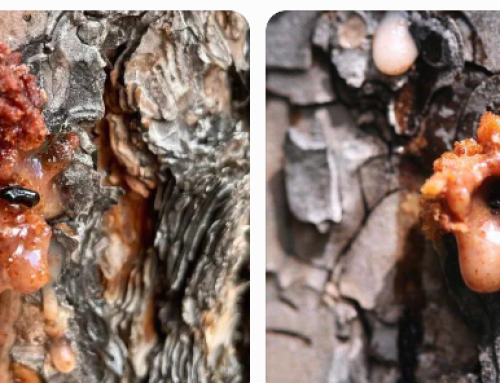
Possible signs of beetle activity
- Small pitch tubes or resin deposits along the trunk.
- Fine reddish-brown boring dust in bark crevices.
- Fresh woodpecker feeding or bark removal.
- Needles turning yellow, orange, or reddish-brown.
- Small exit holes left after beetles emerge.
These signs do not automatically prove a successful mountain pine beetle infestation; other bark beetles or tree-health problems may produce similar symptoms. Diagnosis comes before treatment or removal.
Can thinning prevent pine beetles?
Where appropriate, thinning can reduce stand competition and improve long-term tree vigor. However, it cannot guarantee immunity during a major beetle outbreak. Trees successfully mass-attacked by mountain pine beetles generally cannot be saved by a curative treatment; management then focuses on properly handling infested material and protecting neighboring trees.
For confirmed infestations, the Colorado State Forest Service’s beetle management guidance describes timely removal, responsible wood disposal, forest thinning, and selected preventive measures. Licensed professionals should handle any regulated pesticide applications.
4. Scrub Oak, Brush Clearing, and Understory Management
The vegetation beneath the forest canopy matters just as much as the tall trees. Colorado Front Range properties may contain Gambel oak (often called scrub oak), saplings, grasses, native shrubs, and accumulated dead branches.
These plants support wildlife and ecosystem function. They do not need to be removed indiscriminately. But dense vegetation can affect access, contribute to fuel continuity, and make management more difficult.
Appropriate treatments may include selective brush thinning, reducing dense oak clusters, pruning suitable lower branches, and removing saplings that create excessive competition or undesired fuel connections.
Scrub oak can resprout vigorously after cutting. This makes follow-up maintenance an important part of a successful brush-management project.
5. Is Forestry Mulching Good for Forest Health?
Forestry mulching uses specialized equipment to mechanically process selected brush, saplings, and other woody vegetation. It can be useful on properties where access, slope, vegetation size, and soil conditions are suitable.
Potential advantages include opening overgrown areas, managing dense understory vegetation, preparing selected areas for additional work, and reducing some material-handling needs.
But mulching does not make woody fuel disappear. It changes the material into chips and fragments that remain on the ground. Heavy accumulations may be unsuitable near homes, and equipment can damage roots or compact sensitive soils if used poorly.
The right treatment for the right terrain
A good property plan may combine mechanical mulching on accessible areas with chainsaw or manual work on steep, rocky, or sensitive slopes. Equipment is a tool, not a replacement for site-specific judgment.
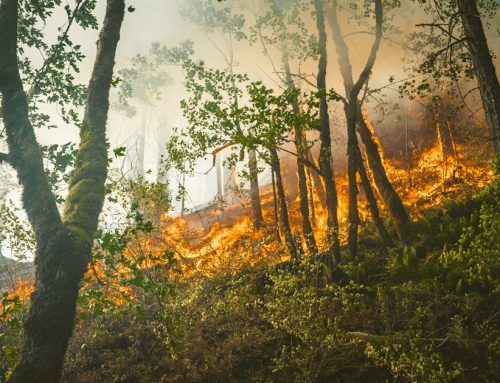
6. Forest Health and Wildfire Mitigation: Related, but Not Identical
Forest health emphasizes ecological condition and long-term resilience. Wildfire mitigation emphasizes reducing hazards that may contribute to wildfire damage. Many well-designed projects address both.
For example, selectively thinning overcrowded trees can reduce competition while changing the continuity of canopy fuels. Managing shrubs and low branches can reduce ladder fuels that connect surface vegetation to elevated tree crowns.
However, an attractive, well-thinned forest does not make a home fireproof. Homeowners also need to consider the first five feet around the structure, ember entry points, roofing, gutters, decks, and other home-ignition vulnerabilities. Refer to the Colorado State Forest Service’s defensible space guidance.
The objective is a sensible combination of healthier vegetation, reduced fuel continuity where appropriate, and a more fire-resistant home environment.
7. Should All Dead or Damaged Trees Be Removed?
Not always. Standing dead trees, often called snags, can provide valuable wildlife habitat. A dead tree deep within a natural area is a different management concern from a dead tree leaning toward a residence, driveway, or regularly used outdoor space.
Tree removal decisions should consider structural condition, risk to people and structures, access, pest activity, forest density, and the homeowner’s management goals. In some cases, removal is appropriate; in others, retention may be reasonable.
Hazardous tree work near structures, slopes, utilities, and difficult access points should be performed by appropriately qualified personnel. Contact the utility for trees or branches near energized lines.
8. What Happens to Cut Trees, Brush, and Slash?
Removing or thinning vegetation is only part of a forestry project. The resulting logs, branches, and brush must be managed appropriately.
Depending on conditions and local rules, suitable options can include chipping, hauling material off-site, retaining appropriate logs for reuse, or using other approved forestry practices.
This is particularly important during bark beetle activity. Colorado State University Extension explains that certain Ips engraver beetles can breed in fresh conifer slash and wood. Untreated infested logs can also allow beetles to emerge after tree removal.
Homeowners comparing forestry estimates should ask what happens to the debris, whether hauling is included, and how remaining chips or wood will be managed.
9. Soil Protection and Responsible Equipment Use
Forest health begins underground. Soil provides the foundation for roots, water movement, biological activity, and nutrient cycling. Poorly planned equipment access or extensive disturbance can damage retained trees even when their crowns appear healthy.
On mountain properties, forestry planning should account for soil moisture, slope, erosion risk, equipment routes, and areas where root systems may be vulnerable. When conditions are unsuitable for machines, smaller equipment or manual methods may be more appropriate.
Responsible forest management should improve the land without leaving unnecessary rutting, erosion, or damage to desirable trees.
10. Do You Need to Replant After Thinning?
Not necessarily. Some properties already contain abundant natural regeneration. Immediately planting numerous new trees after reducing excessive density can work against the original goal of relieving competition.
Replanting can be useful when a site needs restoration, a suitable species has been lost, or the owner has specific long-term objectives. Species selection should match local soils, elevation, moisture, and site conditions.
A successful forest management plan focuses on the right trees in the right places, not simply the greatest number of trees.
11. What Does a Forest Health Property Assessment Include?
A useful assessment begins by looking at the entire property and learning what the owner wants to accomplish. A few failing trees may call for a different response than several acres of overcrowded ponderosa pine, heavy scrub oak, or difficult terrain.
Common assessment priorities
- Identify tree species, crown conditions, stand density, and apparent decline.
- Look for visible insect and disease indicators that may require specialist diagnosis.
- Review scrub oak, saplings, dense understory, and ladder-fuel connections.
- Consider proximity to structures and applicable defensible space objectives.
- Evaluate slopes, soil conditions, equipment access, and work boundaries.
- Plan appropriate slash handling and cleanup.
- Discuss realistic priorities, maintenance, and documentation of completed work.
Where useful and available, aerial photography or other mapping can add context for larger or complex properties. Advanced mapping is not automatically necessary for every forest health assessment, and it does not replace on-the-ground observation.
Formal diagnosis, regulated pesticide treatment, or specialized tree-risk work may require additional qualified professionals.
12. How Often Should Forest Health Work Be Repeated?
Forests continue to change after thinning or brush removal. New trees emerge, shrubs resprout, needles accumulate, and pests or drought can alter conditions. Long-term success depends on monitoring and maintenance.
An annual walk-through is a practical starting point, particularly after strong wind, heavy snow, major storm damage, or nearby insect activity.
Annual Forest Health Checklist
- Look for newly dead, broken, leaning, or declining trees.
- Check pines for beetle symptoms and unusual woodpecker activity.
- Review regrowth of scrub oak, small trees, and shrubs.
- Look for accumulated branches, deadwood, and heavy slash.
- Inspect vegetation near homes, decks, driveways, and outbuildings.
- Review drainage, erosion, access, and soil disturbance.
- Plan any thinning or removal before problems become harder to address.
Frequently Asked Questions About Forest Health in Colorado
How can I tell if my forest is unhealthy?
Warning signs can include widespread tree decline, unusual insect activity, poor crown condition, and heavy competition among trees. However, occasional dead trees or insect activity are normal parts of forest ecosystems. Evaluate the overall stand rather than one symptom alone.
Will thinning help the remaining trees grow?
In suitable conditions, selective thinning can reduce competition for water, light, and growing space. Results depend on tree species, stand condition, drought, and how the treatment is designed.
Can thinning stop mountain pine beetles?
Thinning can support long-term vigor but cannot guarantee protection from an outbreak. Confirmed infested trees and high-value neighboring trees may need additional management planning.
Should I remove every dead tree?
No. Some dead trees provide wildlife habitat. Removal decisions should consider falling-tree hazards, structures, access, active insects, and property-management objectives.
Is forestry mulching a good alternative to hauling brush away?
It can be, depending on terrain, vegetation, and intended use of the area. Wood chips remain combustible, and placement near structures or heavy concentrations of mulch may be inappropriate.
Can forest management reduce wildfire exposure?
Well-designed fuel treatments can change hazardous fuel arrangements and support wildfire resilience. They cannot eliminate wildfire exposure or replace home hardening and defensible space.
Will forest thinning help my homeowners insurance?
Some insurers recognize qualifying wildfire mitigation or accepted certifications, but thinning alone does not guarantee coverage, a discount, or renewal. Ask your insurer which standards and documentation it requires before beginning insurance-driven work.
How much does forest thinning cost in Colorado?
Costs vary with acreage, tree size and density, slope, access, equipment needs, and how logs and debris will be handled. A property-specific scope is more useful than comparing estimates based on acreage alone.
Forest Health Services From Stone Elk Land Services
Stone Elk Land Services helps Colorado Front Range property owners make thoughtful decisions about the trees and vegetation surrounding their homes, driveways, and acreage. Rather than treating every wooded lot the same way, we consider the property, its access, existing vegetation, and the owner’s goals.
- Selective forest thinning: Manage excessive tree density while retaining desirable healthy trees.
- Wildfire mitigation and defensible space: Reduce selected hazardous fuels around homes and structures.
- Forestry mulching and brush clearing: Manage dense scrub oak, small trees, and overgrown understory where appropriate.
- Tree removal: Address selected declining, hazardous, or unwanted trees as part of a practical land plan.
- Property assessments: Identify visible conditions, project priorities, terrain constraints, and potential maintenance needs.
- Documentation and mapping: Discuss before-and-after records or optional mapping when they add value to a project.
Service areas: Evergreen, Conifer, Morrison, Indian Hills, Pine, Ken Caryl, Kittredge, Aspen Park, Idledale, Littleton, and surrounding Colorado Front Range foothill communities.
STONE ELK LAND SERVICES
A Healthier Forest Starts With a Plan.
Concerned about overcrowded trees, pine beetles, scrub oak, or wildfire fuels? Tell us about your property and we’ll discuss appropriate next steps.
Or call 303-475-4409
Forestry Research and Homeowner Resources
The following sources are helpful for readers who want to explore current Colorado forest health and forest-management guidance:
- Colorado State Forest Service – 2025 Forest Health Report
- Colorado State Forest Service – Promoting Resilient Forests in Colorado
- Colorado State Forest Service – Management Practices for Different Forest Types
- Colorado State Forest Service – Mountain Pine Beetle Management Options
- Colorado State University Extension – Ips Beetles
- Colorado State Forest Service – Protect Your Home and Property From Wildfire
Educational notice: This article provides general forestry information and is not a substitute for a site-specific assessment, formal pest diagnosis, tree-risk evaluation, or advice from a licensed insurance professional. Management results vary with forest type, property conditions, weather, and treatment design. No forestry treatment guarantees tree survival, wildfire protection, or insurance benefits.